


Was macht ein Optometrist? Aufgaben, Ausbildung & Leistungen
Juli 12, 2026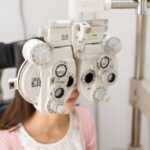
Was ist Funktionaloptometrie?
Juli 21, 2026
Many people suffer daily from headaches, burning eyes, or persistent difficulty concentrating – without finding a clear explanation. Eye tests, visits to the ophthalmologist, perhaps even new glasses – and yet the symptoms don’t improve. In many of these cases, a frequently overlooked cause lies behind it: heterophoria (latent strabismus ).
Heterophoria, also known as binocular vision dysfunction, is a latent misalignment of the eyes that places considerable, constant strain on the visual system. Because the misalignment remains invisible to others and can initially be compensated for in everyday life, it often goes undetected for years. However, with a correct diagnosis and precise prism correction, the symptoms can frequently be significantly alleviated.
This article explains in detail what heterophoria is, what symptoms it causes, how it is diagnosed – and what treatment options are available.
What is heterophoria?
The term heterophoria describes a misalignment of the eyes that is present at rest but is compensated for by active muscle work of the visual system. Unlike manifest strabismus (crossed eyes), where the misalignment is visible, heterophoria remains completely invisible to others.
Both eyes are generally capable of focusing on an object together. However, in the case of heterophoria (latent strabismus), the eye muscles and the brain must constantly compensate for the slight misalignment and produce a single, sharp image. This process – known as fusion compensation – places a constant strain on the neural and muscular systems and, over time, leads to characteristic symptoms.
There are different forms of heterophoria:
- Esophoria: The eyes tend to turn inwards (inward deviation)
- Exophoria: The eyes tend to turn outwards (outward deviation)
- Hyperphoria: One eye deviates upwards
- Cyclophoria: The eyes show a rotational misalignment.
In German optometry, heterophoria is frequently measured using the Haase measurement and correction method (MKH) and corrected with prismatic lenses. This method is particularly precise and takes into account the interaction of both eyes under natural visual demands.
Recommended article: What does an optometrist do?
How common is heterophoria?
Heterophoria is considerably more widespread than commonly believed. Experts estimate that up to 70 percent of the population exhibits measurable heterophoria. However, not every misalignment necessarily leads to symptoms – the crucial factor is whether the degree of misalignment exceeds the individual’s compensatory abilities.
Complaints occur particularly frequently during phases of life in which the eyes are under particular strain: during school years, in professional life with intensive screen work, or in old age when the ability to compensate decreases.

The symptoms of heterophoria in detail
The symptoms caused by heterophoria are varied and affect more than just the eyes themselves. Because the visual system is closely linked to the entire body, symptoms can manifest in different parts of the body. This often makes correct diagnosis difficult and leads to those affected not receiving a clear diagnosis for a long time.
Headache
Headaches are among the most common and debilitating symptoms of heterophoria. They typically occur in the frontal (forehead), temporal (temples), or occipital (back of the head) area and usually worsen throughout the day – especially after prolonged reading, long hours working at a computer screen, or concentrated close-up work.
The underlying mechanism is the constant tension of the eye muscles and the associated nerves. The brain is forced to continuously send corrective signals to compensate for the misalignment – a process that, over time, leads to muscle-related tension headaches. Many sufferers report that the headaches subside after rest or in the morning, but return later in the day.
Eye fatigue and eye pain (asthenopia)
The feeling of tired, heavy, or burning eyes – medically termed asthenopia – is a classic symptom of heterophoria (latent strabismus). Those affected often describe a feeling of pressure behind the eyes, a burning or scratchy sensation, and the need to frequently close or rub their eyes.
These symptoms occur particularly after prolonged reading, screen work, or other visually demanding activities. The cause is the constant muscular strain that the visual system exerts to compensate for the misalignment.
Blurred or changing vision
Heterophoria can cause temporary blurred vision that changes throughout the day. Those affected often report that their visual acuity temporarily decreases or fluctuates, especially after intensive close work. This effect occurs because the accommodation system – the mechanism for focusing – is closely linked to binocular control and is also affected by a compensatory disorder.
Occasional double vision
Although double vision is less frequent and less pronounced in heterophoria than in manifest strabismus, it can occur during periods of extreme fatigue , after alcohol consumption, or in stressful situations. At these times, the compensatory capacity of the visual system is no longer sufficient to fully correct the misalignment, so the two eye images do not merge into a single, unified image for a short period.
Difficulty concentrating
In cases of heterophoria (latent strabismus), the brain must permanently devote a significant portion of its processing capacity to compensating for the misalignment of the eyes. This directly impairs cognitive concentration . Affected individuals report that they find it more difficult to concentrate when reading, studying, or working, are more easily distracted, and frequently lose their train of thought.
Especially in children, this symptom is often misinterpreted – as attention deficit, lack of motivation or as an indication of a learning disability, although the actual cause lies in an undetected binocular vision dysfunction.
Reading and learning difficulties in children
Children with binocular vision dysfunction often exhibit characteristic difficulties with reading and writing : letters seem to jump or shift, lines are skipped while reading, and words are reversed or omitted. Copying from the board is also difficult, as switching focus between near and far places particular demands on binocular control.
If these symptoms occur in children, an optometric examination with targeted testing of binocular vision should be carried out – before a reading and spelling disability is diagnosed prematurely.
Neck pain and tension
An often underestimated symptom of heterophoria is neck tension and shoulder and neck pain . This arises from an unconscious compensatory head posture: those affected tilt or turn their heads slightly to compensate for the misalignment of the eyes and to allow for more comfortable vision. This persistent incorrect posture strains the neck and shoulder muscles and can lead to chronic tension and pain, which in some cases is even treated as an orthopedic problem.
Dizziness and balance problems
The visual system plays a central role in maintaining balance. Heterophoria (misalignment of the eyes) can lead to dizziness – especially when standing up quickly, climbing stairs, or in confusing, stimulating environments such as shopping malls or busy streets. The dizziness arises from discrepancies between visual signals, the vestibular system, and the body’s proprioception (the sense of body position and movement).
Impaired spatial vision
Spatial vision (stereoscopic vision) requires precise cooperation between both eyes. In cases of heterophoria (latent strabismus), this cooperation is disrupted, which can lead to difficulties with depth perception. Affected individuals sometimes have problems judging distances – for example, while driving, playing sports, or reaching for objects.
Light sensitivity and glare
Some people with heterophoria report increased sensitivity to bright light or glare . This effect may be related to the constant overload of the visual processing system, which is already working at its limit due to compensatory efforts.
General fatigue and irritability
The brain’s constant, unconscious compensatory work impacts overall well-being. Many sufferers report persistent fatigue , rapid exhaustion, and increased irritability for which they find no obvious explanation. These symptoms are a direct consequence of chronic overexertion of the visual and nervous systems.
Causes of heterophoria
The causes of heterophoria are varied and not always fully understood. The following factors are considered relevant in the literature:
Congenital factors: Many affected individuals already exhibit a slight inequality in the length or pulling force of the eye muscles from birth, leading to a latent misalignment.
Uncorrected or incorrectly corrected visual defects: Uncorrected or insufficiently corrected astigmatism, anisometropia (different visual defects in both eyes) or untreated presbyopia can strain the binocular balance and exacerbate heterophoria.
Chronic visual overload: Intensive and prolonged close-up and screen work can overload the binocular system and cause latent misalignments to become symptomatic.
General exhaustion and stress: The compensatory capacity of the visual system is not constant. During periods of physical exhaustion, illness, or psychological stress, fusion compensation decreases, and previously compensated misalignments become symptomatic.
Neurological factors: In rare cases, neurological diseases or injuries can affect the control of eye movements and lead to heterophoria.
Diagnosis: How is heterophoria diagnosed?
Diagnosing heterophoria requires a specialized optometric examination that goes significantly beyond a standard eye test. A normal eye test typically does not detect heterophoria.
In Germany, the Haase measurement and correction method (MKH) is an established and recognized procedure for the diagnosis and treatment of heterophoria. It enables a precise measurement of the misalignment under physiological conditions – that is, taking into account actual binocular vision in everyday life.
The investigation typically includes the following steps:
Medical history: Targeted recording of complaints, their frequency, their temporal dependence on visual demands and general well-being.
Refraction: Precise determination of the complete correction requirements of both eyes as a basis for binocular examination.
Binocular functional testing: Systematic examination of binocular vision using polarized or dissociative test procedures that reveal latent misalignments.
Prismatic correction: If a misalignment is detected, the optimal prismatic correction is determined step by step, relieving the binocular system.
Assessment of symptom relief: The correction is considered suitable if it significantly reduces the affected person’s symptoms and improves binocular vision.
Treatment of heterophoria
prism glasses
The most common and effective treatment method is prismatic lens correction . Prism lenses redirect the incoming light so that, despite the misalignment of the eyes, it strikes the correct area of the retina. This significantly reduces the compensatory work of the eye muscles, and in many cases, the symptoms can be considerably alleviated.
The prisms can be implemented either as foil prisms applied to the lens (temporary, for testing the correction) or as ground prisms (permanently integrated into the lenses ).
Important: Prismatic correction should only be determined by qualified professionals with additional optometric training, as an incorrect prism prescription can worsen the symptoms.
Vision training (orthoptics and vision therapy)
In certain cases – especially in children and adolescents – targeted vision training can help strengthen fusion compensation and improve binocular cooperation. This is done in collaboration with orthoptists or optometrically trained professionals.
Optimization of visual aids
Sometimes, symptoms can be significantly improved by a more precise adjustment of the existing glasses – especially by correct centration and complete correction of all visual defects – before prismatic correction becomes necessary.
Frequently Asked Questions
What is heterophoria?
Heterophoria (latent strabismus) is a latent misalignment of the eyes that is compensated for by active muscle work. It is invisible to others, but the constant compensatory effort causes a variety of problems such as headaches, eye strain, and difficulty concentrating.
What symptoms does heterophoria cause?
Typical symptoms include headaches, burning or tired eyes, blurred vision, difficulty concentrating, reading and learning difficulties, neck tension, dizziness, occasional double vision, and general exhaustion. Because these symptoms are varied, heterophoria often goes undetected for a long time.
Is heterophoria the same as strabismus?
No. In manifest strabismus, the misalignment of the eyes is permanently visible. In heterophoria, the misalignment is compensated for by active muscle work, so that the eyes appear straight from the outside. Heterophoria is a latent form of misalignment.
How is heterophoria diagnosed?
Heterophoria is diagnosed through a specialized optometric examination of binocular vision. In Germany, the Haase measurement and correction method (MKH) is an established procedure. A simple vision test is insufficient to detect heterophoria.
How is heterophoria treated?
The most common treatment is prismatic spectacle correction. Prism lenses optically compensate for the misalignment and relieve strain on the eye muscles. In some cases, vision training may also be recommended. The correction must be determined by a qualified optometrician.
Can binocular vision dysfunction occur in children?
Yes. Heterophoria can occur in childhood and often manifests as reading and writing difficulties, rapid fatigue during learning, and concentration problems. Since these symptoms are often misinterpreted as a learning disability, an optometric examination is strongly recommended for children experiencing school difficulties.
Can heterophoria worsen without treatment?
Yes. Without treatment, uncorrected strabismus can lead to an increasing overload of the visual system’s compensatory capacity. Symptoms can intensify, especially during periods of high visual strain, stress, or general fatigue.
Can regular glasses help with binocular vision dysfunction?
Ordinary eyeglasses correct refractive errors such as nearsightedness or farsightedness, but not heterophoria (misalignment of the eyes). Special prism lenses, manufactured based on an optometric measurement of binocular vision, are required to treat heterophoria.
Conclusion
Heterophoria is a widespread but often unrecognized phenomenon that can significantly impair the well-being and quality of life of those affected. The symptoms – ranging from headaches and eye strain to concentration problems, dizziness, and neck tension – are varied and are often attributed to other causes.
The crucial step is a specialized optometric examination that specifically tests binocular vision and precisely identifies any misalignment. With the correct prismatic correction, the symptoms can often be significantly and permanently alleviated.
If you recognize yourself in the described symptoms or have been suffering from unexplained headaches, eye fatigue or concentration problems for a long time, you should not wait any longer.